Want to be in the loop?
subscribe to
our notification
Business News
BANKING RESTRUCTURING NEEDS A PUSH
With the characteristics of an economy in transition, the commercial banking system of Vietnam plays a very important role in the national financial system, attracting the attention of public opinion as well as economic entities. Therefore, the stability and sustainable development of the banking system will ensure the stability and development of the national economy.
Positive results
During the implementation of the restructuring, commercial banks of Vietnam have achieved some positive results. In particular, the restructuring process was very drastic, but it neither causes nor affects the system security and the national currency security; the problems and the basic existence of the credit institutions, regarding the restructuring and non-credit restructuring issues, have been revealed quite clearly. This lays foundations for the processing steps and improvements next time.
However, many of the restructuring measures to clear bad debts are quite theoretical and applicable in a short term. Therefore, the mission of the banking industry in the next stage is to define and apply some solutions to help the banking system of Vietnam make a breakthrough and keep on the right track, contributing to the overall growth of the economy.
Many measures approved by the government have allowed foreign investors to own dominant shares, encouraging foreign banks to buy shares and merge with credit institutions, particularly, weak credit institutions that are not willing to follow up principles and provisions of the current law.
However, in recent years, this policy has not been implemented in practices though there were quite a lot of the discussions, proposals, and public information on the mass media. The piloted implementation of such the measures is essential to make a push for market and further promote the process of the restructuring of the banks in the current period.
Additional solutions
From the market standpoint, the involvement of foreign investors will further promote the process of the restructuring of the Vietnamese banks and of the entire economy. Some good points are analysed as follows:
First, generally, when foreign investors buy shares and get involved in the restructuring of credit institutions, they have goals of taking control over the banks there. Under current regulations, the foreign investors are permitted to own no more than 30 per cent of the charter capital and this ratio is not sufficient for them to take control. If this percentage increases to 35 per cent; the foreign investors may have a majority of shares to veto decisions made by the Board of Shareholders if they do not want to go through, but obviously they cannot take control and drive banks to the directions as expected. If the ownership is increased to 49 per cent of the charter capital, the controls will increase, but financially, this rate is not sufficient for investors to match the financial statement of the credit institutions of the investors' parent bank abroad. Therefore, the ownership of more than 50 per cent is a guarantee for the investor to take over the credit restructuring. Meanwhile, the goals and expectations of the foreign investors can be achieved in multiple aspects.
Second, the sale of the shares of the credit institutions for the foreign investors helps the current shareholders gain economic benefits because the difference of the share price is more than two and three times of the trading price of the ordinary shares. At the same time, this transaction also contributes to a flow of foreign currency for Vietnam so this option should really be encouraged.
Third, this will make use of the advantages of foreign investors such as technology, process, products, and risk management mechanisms and business transparency in the international scope. Thus, through the participation and control of the credit restructuring, the problem concerns of the State Bank of Vietnam on cross-ownership and loans to the related parties will be overcome.
The fourth, this will help improve financial capability. Purchasing of the shares and taking control of the credit institutions banks restructuring are just the first steps of the foreign investor. Once taking control, the foreign investors tend to improve the financial capability of the credit institutions; the foreign investors will continue increase their charter capitals at tier 2, through which the banks will absorb the real cash flows to promote the restructuring effectively.
Finally, the banking restructuring could attract funding from the parent banks and foreign markets, which benefits not only the credit institution but also their customers.
There is a reality in the marketplace that FDI enterprises who are the traditional customers of the group of foreign banks with 100 per cent foreign capital are able to access cheaper funding sources, by which they are able to compete at an advantage, at least in terms of input costs, with other domestic enterprises. Besides, the cost difference is a significant factor, creating many advantages for the foreign banking groups. This advantage continues to be transferred to the customers they are serving.
Thus, in the future, a commercial bank with a dominant ownership by foreign investors would have the ability to reduce input costs, thereby supporting domestic enterprises to access to lower interest funding than before and indirectly improving the competitiveness of the Vietnamese enterprises in particular and the economy in general.
In short, the opening of financial markets to welcome foreign investment is a strong trend today. The solution allows the foreign investors to get involved in restructuring to bring real benefits for existing shareholders and foreign investors, as well as facilitate the investment environment and economic development. This also helps resolve many of the goals of the credit system restructuring process regarding cross-ownership, lending and enhancement of the financial capacity of the credit institutions. The piloted measure can generate a significant milestone in the process of restructuring the credit institutions in the future.
Source: VCCI
Related News
VIETNAM ECONOMY INVESTMENT
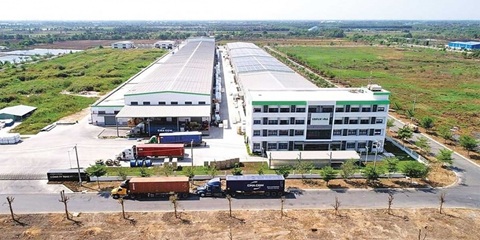
FOREIGN INVESTORS SEEKING A SYNCHRONISED MANUFACTURING ECOSYSTEM
Instead of focusing only on land costs and incentives as usual, foreign investors are seeking a synchronised manufacturing ecosystem, from stable power supply and logistics to shared infrastructure and the convenience of completing residence procedures for experts to serve their long-term investment in the country.
INFRASTRUCTURE / CONSTRUCTION / LOGISTIC / PORT
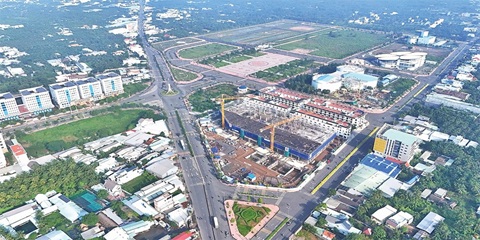
DONG THAP PROVINCE STEPS UP INDUSTRIAL EXPANSION AND INFRASTRUCTURE CONNECTIVITY
Accelerating public investment, strengthening inter-regional connectivity, and expanding industrial land are helping Dong Thap efficiently bolster competitiveness and drive economic growth. Following the 2025 merger of the former Dong Thap and Tien Giang provinces, the expanded Dong Thap province in the Mekong Delta faces mounting pressure to accelerate infrastructure development and strengthen connectivity among local economic zones, urban areas, industrial parks (IPs), and production centres.
PROPERTY / INDUSTRIAL ZONE
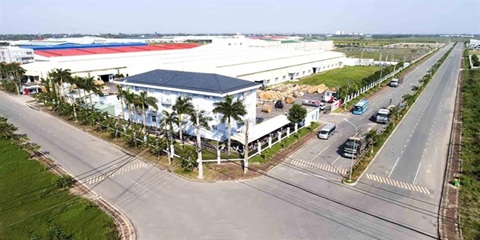
HCM CITY ATTRACTS US$5.7 BILLION INTO EXPORT PROCESSING AND INDUSTRIAL ZONES
HCM City attracted US$5.7 billion in domestic and foreign investment into its export processing and industrial zones during the first nine months of 2026. The figure exceeded the city's full-year target by 31 per cent, highlighting strong momentum in high-quality industrial investment under Resolution No.10-NQ/TW. Total investment reached 131 per cent of the 2026 target of $4.25 billion and represented a 29 per cent increase compared with the same period in 2025, according to the city's Export Processing and Industrial Zones Authority (HEPZA).

BANKING / FINANCE / INSURANCE / TAX
REMITTANCES TO HCM CITY RISE NEARLY 40% IN Q3
Remittances to HCM City reached more than US$2.83 billion in the third quarter of this year, up 39.5 per cent from the previous quarter and 3.6 per cent year-on-year. This was the first quarter showing positive annual growth this year, helping narrow the decline in remittance inflows over the first nine months. According to the State Bank of Vietnam (SBV)’s Regional Branch 2, remittances transferred to HCM City through credit institutions and economic organisations totalled $2.835 billion in Q3, an increase of more than $802 million from the previous quarter.

VIETNAM ECONOMY INVESTMENT
LOCALITIES REPORT BREAKTHROUGH RESULTS IN FDI IN FIRST NINE MONTHS
In Ho Chi Minh City, total registered capital reached $17.2 billion in the first nine months, up 4.2 times from the same period last year. The figure included more than $9.35 billion in newly registered capital and over $4.9 billion in additional capital for existing projects. Foreign investors also registered more than $2.9 billion through capital contributions and share purchases.

TECHNOLOGY
TECH SECTOR GROWTH OPENS UP OPPORTUNITIES FOR VIỆT NAM TO GO GLOBAL
The growth of the electronics, semiconductor and high-tech sectors worldwide is opening up a variety of opportunities for Vietnamese enterprises to integrate more deeply into the global supply chain. However, to become suppliers for these corporations, domestic enterprises must meet rigorous standards regarding quality, technology, productivity and order fulfilment capabilities.
Events Sponsors






















